By Ankur Gohri, Director at SHTC (www.shtc.co.in)
The Office Coffee Machine Conversation That Needs to Die
It starts the exact same way in almost every company. You stand near the break room coffee machine, or maybe sit in a conference room after a mandatory compliance seminar, listening to people unwind. Then someone lowers their voice, leans in slightly, and says the line that has echoed through corporate corridors for decades: 'Look, I am not saying harassment is acceptable—obviously it isn't. But isn't dress part of the problem? If women just wore more conservative clothes, wouldn't a lot of these issues disappear?'
The question gets asked with a calm, almost reasonable tone. It presents itself as simple practical wisdom—an easy policy adjustment to keep order and prevent uncomfortable workplace friction. But behind that polite tone sits a very old, dangerous reflex: victim-blaming.
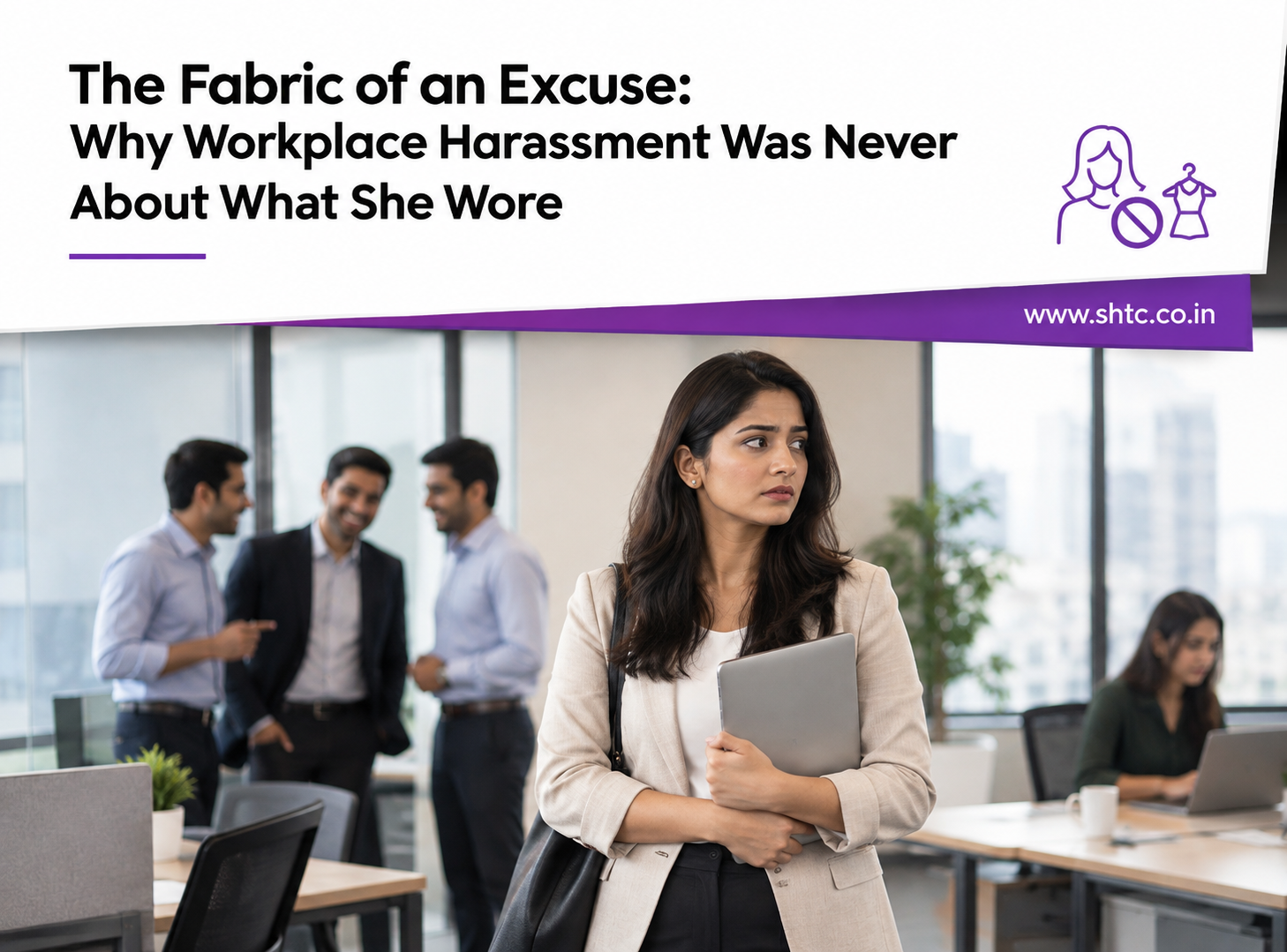
When someone focus on hemlines, sleeve lengths, or skirt cuts, they are trying to reduce a complex human behavior problem into a basic wardrobe issue. We convince ourselves that personal safety at work is just a matter of picking the right outfit from your closet. It is a comforting thought, but it is completely wrong. Workplace harassment has never been about fabric. It has always been about power.
Deconstructing the 'Trigger' Myth in Corporate Dress Codes
The core idea behind policing dress codes relies on a deeply flawed assumption: that 'provocative' clothing acts like an irresistible trigger for inappropriate behavior. If that logic actually held up, wearing modest clothes would act as a complete shield against misconduct. Real-world experience demonstrates the exact opposite.
Every single day, across every industry and city, women wearing traditional sarees, loose salwar suits, ankle-length skirts, full burqas, and heavy winter coats experience street harassment and office misconduct. Boundary violations target individuals across every age group—sparing neither infants, elderly grandmothers, nor hospital patients resting in plain gowns.
Look at the globally recognized art exhibition 'What Were You Wearing?' which asked assault survivors to describe the exact clothes they had on during their attacks. The gallery did not display party dresses or revealing outfits. It was filled with baggy sweatpants, oversized flannel shirts, cartoon pajamas, school uniforms, and plain work button-downs.
If full-coverage clothing actually stopped people from crossing boundaries, conservative societies across the globe would report zero harassment cases. The numbers prove otherwise. Clothes do not stop an aggressor because clothes are not what drove them to act in the first place.
Power, Not Passion: The Real Mechanics of Workplace Misconduct
The biggest mistake anyone can make when handling workplace conduct is confusing harassment with sudden physical attraction. Misconduct in professional settings is rarely about desire. It is an exertion of authority, control, and perceived impunity.
Perpetrators do not single out a colleague because of an irresistible skirt or a stylish top. They select targets they believe lack the organizational leverage, social backing, or standing to fight back. Harassment thrives wherever structural power imbalances go unchecked:
- A senior partner exercising subtle leverage over an intern whose career relies on a performance evaluation.
- A manager crossing boundaries with a freelance contractor or third parties who cannot afford to lose the contract.
- An office culture that lets predatory comments and uncomfortable jokes slide under the banner of 'harmless banter.'
Claiming harassment is a reaction to clothing implies that working adults have zero self-control. We do not excuse a house break-in because the owner had a nice television visible through a window. We do not excuse a physical fight because someone stepped outside. We hold the offender entirely accountable for their actions. Corporate culture demands the exact same standard.
The 'Just-World' Psychological Trap in Executive Boardrooms
Why does the clothing argument persist so stubbornly in break rooms and boardrooms? Psychologists point to the Just-World Fallacy—a deep subconscious desire to believe that the world is fair and orderly, where good things happen to good people and bad things only happen to people who somehow 'asked for it.'
Admitting that an innocent colleague can be targeted simply because someone else chose to abuse power is terrifying. It forces leaders to face an unsettling reality: vulnerability can touch anyone at any time, regardless of their choices. Blaming skirts or sleeveless tops provides a false psychological shield: 'If she just wore pants, she would be safe. If I dress modestly, it won't happen to me.'
It works as a mental defense mechanism, but it comes at a terrible cost. It lets the aggressor off the hook and places the burden of preventing misconduct onto the person being targeted.
Redefining Professional Standards and POSH Compliance
Organizations have every right to set dress codes for brand representation, safety, or functional standards (such as business suits or lab gear) but that authority sits separately from how your Internal Committee handles a harassment complaint. Leadership must remain crystal clear about what dress codes actually accomplish—and what they do not:
- A dress code is an aesthetic standard, not a security system.
- Modesty is a personal styling choice, not a crime prevention tool.
- Professionalism is defined by how you behave, not how someone else dresses.
Workplace legal frameworks—including the POSH (Prevention of Sexual Harassment) Act 2013 in India and Title VII in the United States—recognize this exact reality. Compliance laws do not measure sleeve length or fabric thickness. They evaluate unwelcome conduct, hostile work environments, and abuses of power.
Reframing the Corporate Conversation
The next time a colleague or manager suggests that tightening dress codes will solve workplace misconduct, change the direction of the conversation immediately. Stop asking 'Why was she wearing that?' and start asking 'Why did an adult professional think they had the right to cross a boundary?'
Safe, high-performing workplaces are not built by measuring skirts or policing closets. They are built when leadership enforces zero tolerance for entitlement, demands personal accountability from every employee, and refuses to treat someone's clothing as permission to violate their dignity.
Author
By Ankur Gohri, Director at SHTC (www.shtc.co.in)