Unwelcome Behaviour Under PoSH: Why Intention Alone Is Not Enough
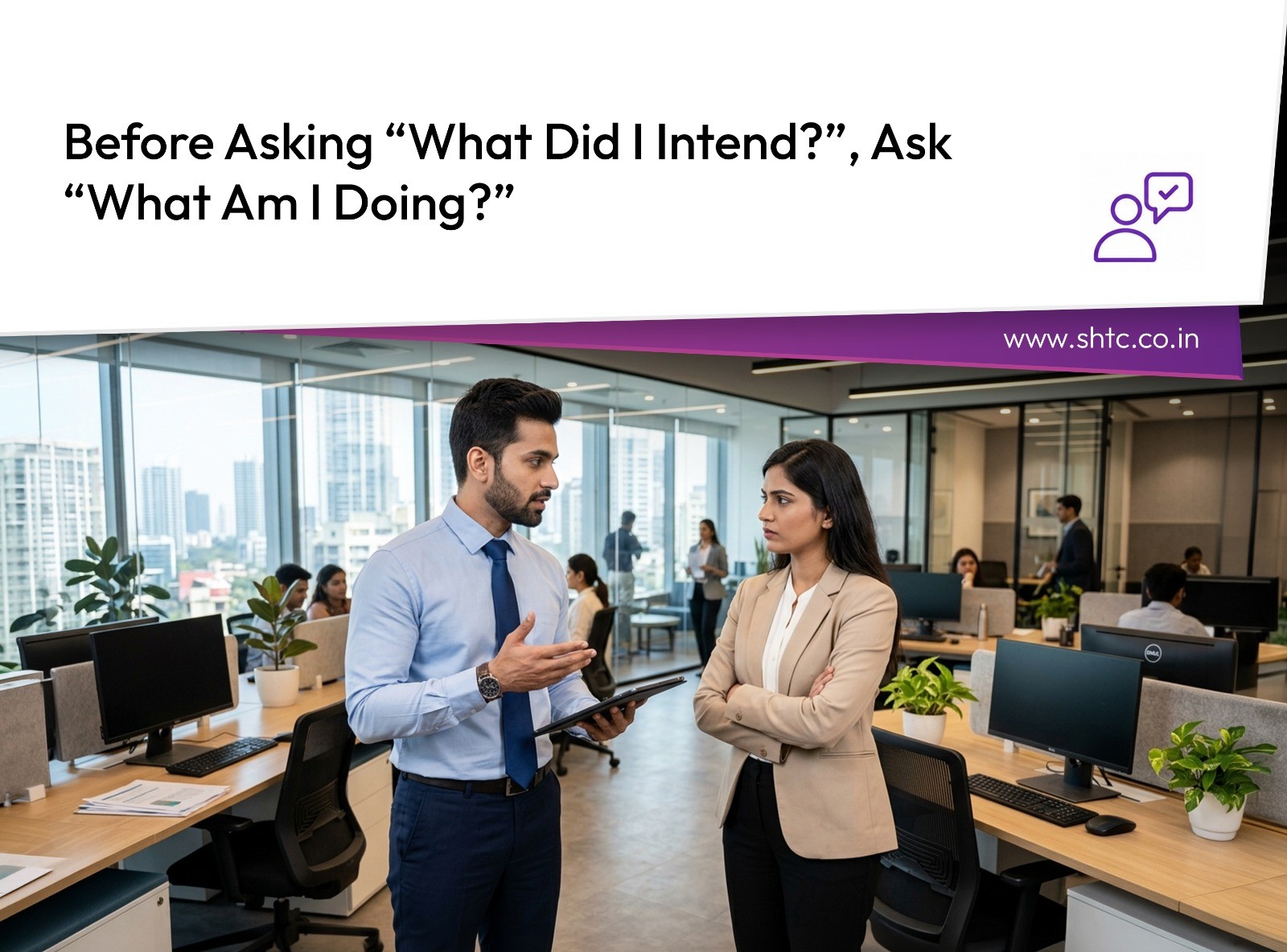
Before asking “What did I intend?”, ask “What am I doing?”
Understanding unwelcome behaviour at work requires looking beyond intention. Under the PoSH framework, what someone says or does, the nature of the conduct and the circumstances of the interaction all deserve attention.
Workplace conduct is often judged by the person engaging in it through the lens of intention.
“I was only being friendly.”
“It was just a joke.”
“I was trying to appreciate her.”
“We know each other well.”
“I didn’t mean anything by it.”
These statements may genuinely describe what a person believes. But intention is only one part of understanding workplace behaviour. A more useful question comes before defending intention:
What am I doing, is it appropriate in this workplace relationship, and could the conduct be unwelcome?
Intention and Conduct Are Not the Same
There is an important distinction between what a person intends and what a person actually does.
Someone may intend to be friendly but repeatedly comment on a colleague’s appearance. A joke may be intended to create humour but contain sexual references. A message may be intended as personal appreciation but become uncomfortable because of its wording, timing or frequency.
This does not mean every joke, compliment, invitation or friendly interaction constitutes sexual harassment. Workplace relationships involve normal human interaction.
The point is different: intention alone does not answer the question of whether particular conduct is appropriate or unwelcome.
The PoSH framework therefore requires greater attention to behaviour and circumstances rather than relying solely on the explanation, “I did not intend to offend.”
Context Changes How Conduct is Experienced
The same words or behaviour can operate differently in different workplace relationships.
Consider an invitation to dinner. Between colleagues with an established friendship, a single invitation may be entirely ordinary. The situation can look different where a senior manager repeatedly invites a junior employee after she has declined.
The words may remain similar. The context has changed.
Hierarchy, frequency, previous interactions, workplace dependence, the nature of the communication and whether conduct continues after boundaries have been indicated can all be relevant to understanding an interaction.
This is why workplace awareness should move beyond memorising lists of “acceptable” and “unacceptable” behaviour.
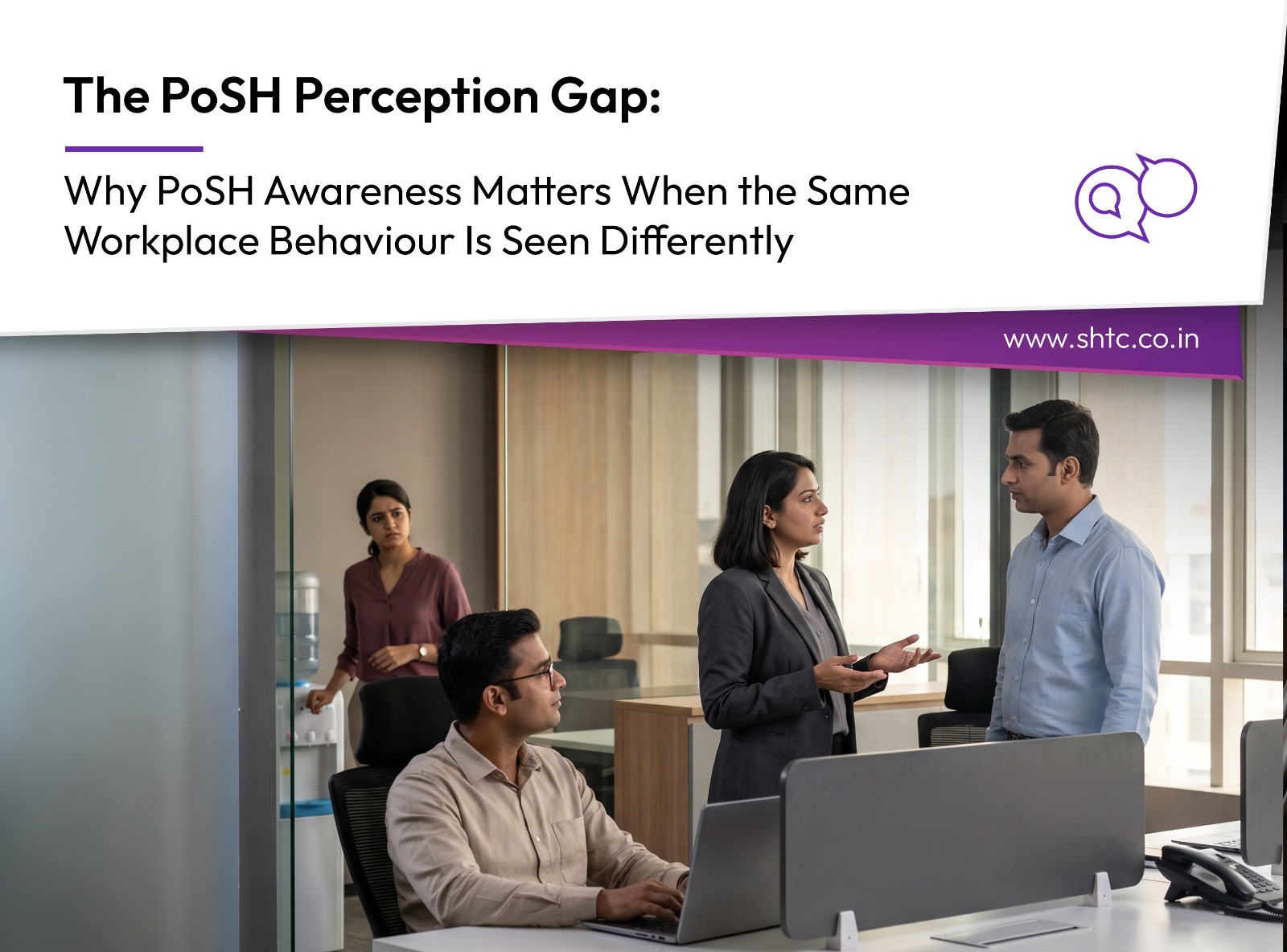
Employees need to develop situational judgement and recognise workplace boundaries. SHTC’s discussion of PoSH awareness and the workplace perception gap explores why people may interpret the same interaction differently.
Unwelcome Is An Important Question
Unwelcome behaviour is conduct the recipient does not welcome. In the PoSH context, it is important to connect this question to the nature of the alleged conduct.
Section 2(n) of the PoSH Act, 2013 identifies specified unwelcome acts, including physical contact and advances, requests for sexual favours, sexually coloured remarks, showing pornography and other unwelcome physical, verbal or non-verbal conduct of a sexual nature.
A useful behavioural checkpoint is:
Is the interaction welcome, or could the conduct be unwelcome in the circumstances of this workplace relationship?
Silence should also be approached carefully. People respond differently to uncomfortable situations. Some object immediately. Others disengage, change the subject, avoid the individual or choose not to confront a colleague or senior directly.
Accordingly, “she did not object at the time” should not automatically become equivalent to “the behaviour was welcome.”
At the same time, discomfort alone should not automatically determine that sexual harassment has occurred. Where a complaint is made, the Internal Committee must examine the allegations, the nature of the conduct, the context and the evidence through the applicable inquiry process.
From Intention To Behavioural Awareness
A stronger workplace culture can encourage employees to examine intention, conduct and possible impact before acting.
THINK → DO → IMPACT → INVESTIGATE
- Think: What do I believe I am doing?
- Do: What am I actually saying, sending, requesting or doing?
- Impact: Could this conduct be unwelcome in this particular workplace relationship?
- Investigate: If a complaint arises, what do the conduct, context and evidence establish?
The final question is particularly important. An Internal Committee should not begin with either “there was no bad intention” or “there was discomfort, therefore harassment occurred.”
It must examine what happened, whether the alleged conduct was sexual in nature and unwelcome, the surrounding circumstances, relevant evidence, witnesses and any employment-related implications.
The PoSH Rules also place responsibility on employers to conduct employee awareness programmes and capacity-building programmes for Internal Committee members. SH_Rules,_20132
The objective of such awareness should therefore exten d beyond telling employees what not to do.
It should encourage a better question before acting:
“Regardless of what I intend, is what I am about to do appropriate for this workplace relationship?”
That small shift—from defending intention to examining behaviour—can prevent many workplace boundaries from being crossed in the first place.
Help employees recognise workplace boundaries before concerns escalate. Explore SHTC’s PoSH training for employees.