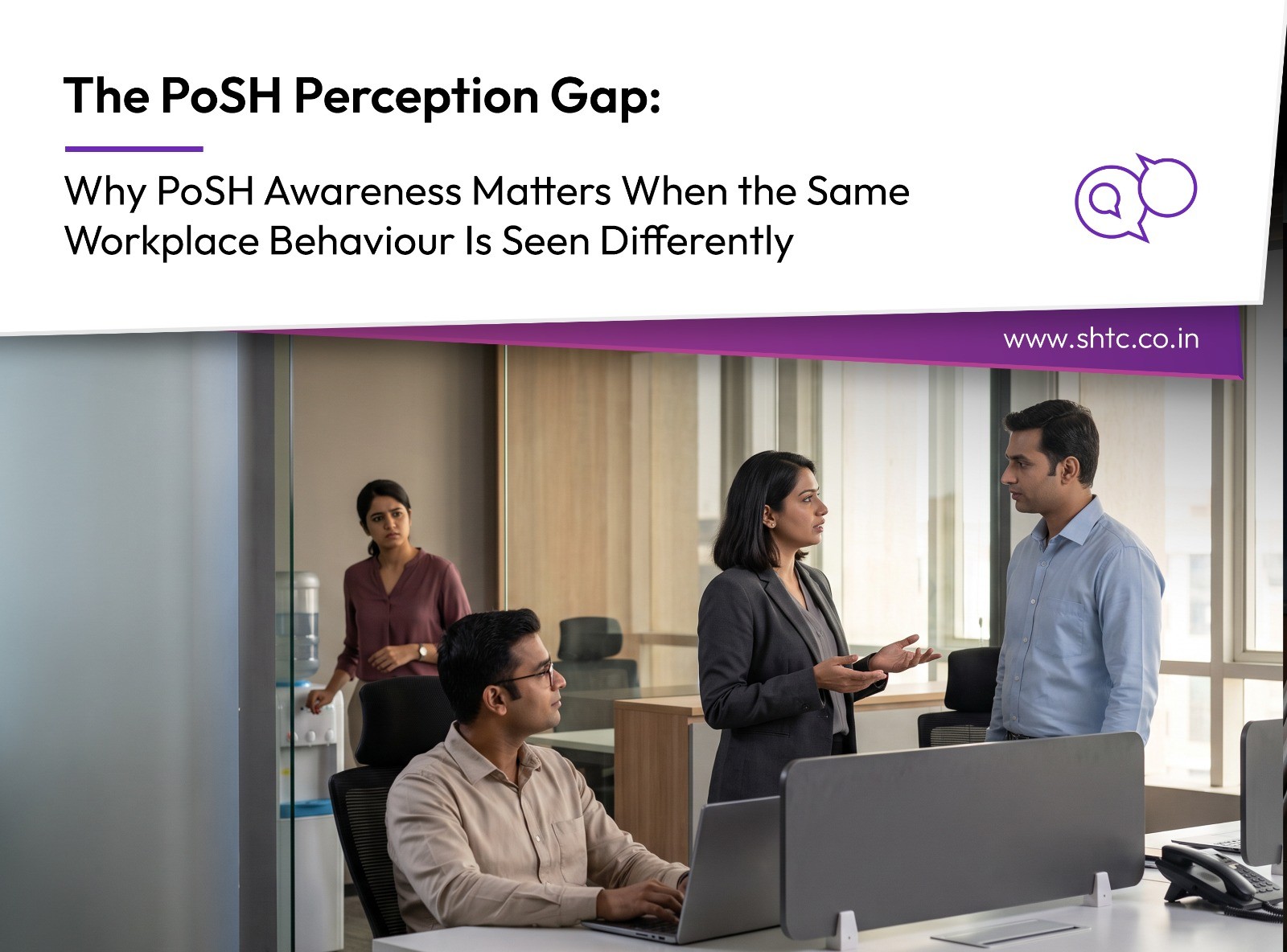
A colleague comments on a woman’s appearance. She smiles and continues working.
He thinks: “It was only a compliment.”
She thinks: “That made me uncomfortable, but I don’t want to create an issue.”
A colleague nearby thinks: “She didn’t object, so perhaps it was fine.”
The manager thinks: “No one has complained.”
The same interaction has produced four different interpretations. This disconnect highlights why robust PoSH awareness is critical—it bridges the gap between how conduct is intended and how it is actually received.
Why Intent and Impact Can Differ
Workplace sexual harassment does not always begin with behaviour that everyone immediately recognises as inappropriate. Boundaries are often crossed gradually through personal remarks, repeated attention, sexualised humour, intrusive questions, persistent invitations, unwanted messages, or other conduct.
The person engaging in the behaviour usually focuses on intention:
“I was joking.”
“I was being friendly.”
“I didn’t mean anything inappropriate.”
The recipient experiences the behaviour differently. She may feel uncomfortable but hesitate to respond because of organizational hierarchy, professional relationships, uncertainty about intentions, fear of being misunderstood, or concern about workplace consequences.
That difference between intention, perception, and impact deserves serious attention.
Silence Should Not Be Interpreted as Agreement
One of the most important behavioural lessons in workplace prevention is that the absence of an immediate objection should not automatically be interpreted as comfort or consent.
People respond to uncomfortable situations differently:
-
Someone may challenge the behaviour immediately.
-
Another may walk away, change the subject, or avoid the person.
-
Others may remain silent or take time to process what happened.
This dynamic becomes particularly critical where there is a difference in authority, influence, or organisational power.
The better workplace question is therefore not simply:
“Did the person say no?”
It is:
“Was the conduct welcome and appropriate in the workplace context?”
No Complaints Does Not Automatically Mean No Risk
Organisations sometimes use complaint numbers as an informal indicator of workplace culture. But a low number of formal complaints can have several explanations:
-
It may reflect a genuinely respectful workplace.
-
It may coexist with uncertainty about what should be reported.
-
It may point to a lack of confidence in the reporting process.
-
It can signal the normalisation of subtle boundary violations.
Complaint numbers tell only part of the story. Building ongoing PoSH awareness ensures employees know their rights and trust the redressal mechanisms in place. Learn more about PoSH compliance and the steps organisations can take to stay prepared.
Move From PoSH Awareness to Recognition
Effective PoSH awareness training should do more than explain definitions, policies, and reporting structures.
-
Employees should be able to recognise boundaries in everyday workplace situations.
-
Managers should know how to respond to early concerns before they escalate.
-
Bystanders should understand their role in maintaining a safe environment.
-
Internal Committee (IC) members should be equipped to assess complaints objectively and sensitively.
The objective is not to make every workplace interaction suspicious, but to create clarity around respect, boundaries, appropriate conduct, and available support.
The real question for organisations is:
Does your program only explain the law—or does it help people recognise when workplace behaviour is crossing a boundary?
The PoSH Perception Gap is a workplace-awareness framework used by SHTC to encourage conversations around recognition, prevention, and respectful workplace behaviour.
Author: Ankur Gohri, Director SHTC (www.shtc.co.in)
Frequently Asked Questions
1. What is the PoSH Perception Gap?
The PoSH Perception Gap refers to the difference between how a workplace interaction is intended by the person initiating it and how it is perceived by the recipient, bystanders, and management. It explains how a single action—such as an unsolicited personal comment—can produce conflicting interpretations regarding appropriateness and consent.
2. Is silence considered consent under the PoSH Act?
No, silence or the absence of an immediate verbal objection is not considered consent or agreement. Individuals may remain silent due to power dynamics, fear of professional repercussions, or shock. Under the PoSH framework, the key consideration is whether the behaviour was unwelcome, not whether the recipient explicitly objected at the moment.
3. What are some examples of workplace behaviour that may cross boundaries?
Examples include:
-
Unwelcome physical contact or invasive personal comments about appearance.
-
Sexualised jokes, inappropriate memes, or suggestive messages.
-
Persistent invitations or intrusive questions about an individual's personal life after passive disinterest or avoidance.
-
Commentary or gestures that create an intimidating, hostile, or uncomfortable work environment.
4. Why is PoSH awareness training important for employees?
PoSH awareness training helps employees understand personal boundaries, recognise unwelcome behaviour early, and differentiate between intention and impact. It informs staff of their legal rights and reporting mechanisms while empowering managers and bystanders to address boundary violations before they escalate.