Reporting Workplace Harassment: The Email She Never Sent
Why employees hesitate to speak up even when reporting channels exist—and what it takes to create a workplace where they feel safe enough to use them.
At a glance: Employees may hesitate to report workplace harassment because they fear being dismissed, do not understand what happens after a complaint, or have little reason to trust the process. A PoSH policy is important, but clear communication, accessible Internal Committee members and practical awareness training help make reporting systems more approachable.
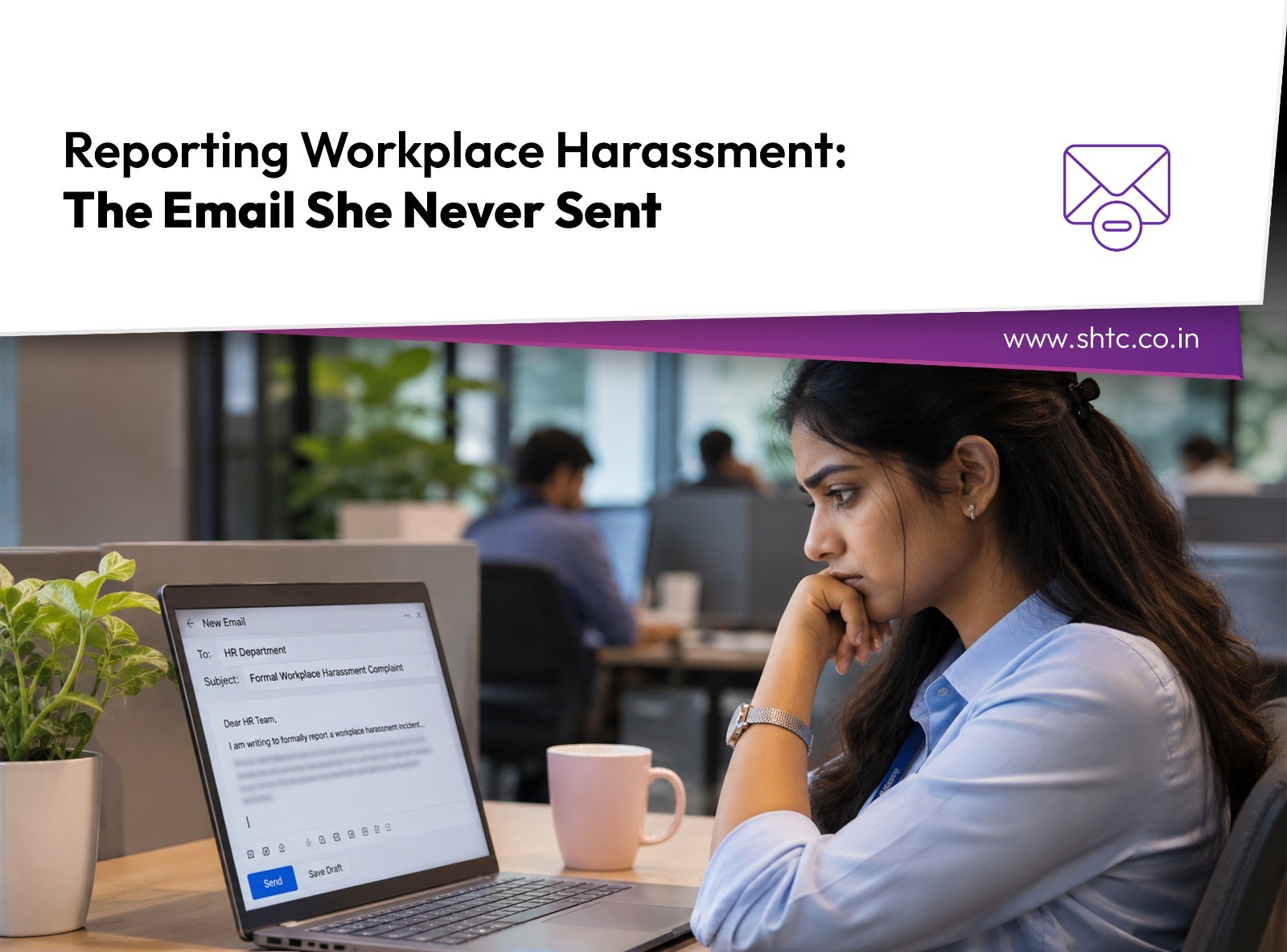
On a Tuesday night, Sam has a draft email open on her laptop, addressed to the Internal Committee. She has been typing and deleting the same paragraph for an hour.
The subject line reads, “Request for guidance.” She keeps it vague because she is not sure whether she is making a complaint or simply asking a question.
For three months, a senior colleague has been making remarks in meetings. There is a joke about her clothes. A comment about how “lucky” the team is to have her. Messages arrive a little too late in the evening and end with a smiley that does not quite mean what it should.
Everyone laughs. Sam smiles back, even when she feels uncomfortable.
Why Employees Hesitate to Report Workplace Harassment
Her company has a PoSH policy. It has an Internal Committee, a training module everyone clicked through last year. If an auditor walked in tomorrow, the answer would be: yes, reporting channels are available. And yet Sam didn't send the email. If we want to understand why employees hesitate, we have to listen to what is running in their minds.
“What if they think I'm overreacting?”
Sam has noticed a pattern, but patterns are hard to describe. She imagines hearing, “Are you sure he meant it that way?”
She has heard someone else receive a similar response. It was not said unkindly, which somehow made it more difficult to challenge.
“I don't know what happens after I send this.”
Does her team find out? Does he get told her name? Does she have to sit in a room with him? Can she talk to someone first without anything becoming "official"?
Nobody ever explained it beyond a policy PDF. For many employees, this uncertainty is among the most powerful barriers to reporting harassment. It doesn't matter how fair the process is if no one can picture it.
“Someone raised a concern before, and it didn't end well.”
Last year, a colleague raised a concern. Sam never learned the outcome, but she heard lunch-table gossip and noticed that the colleague left a few months later.
Perhaps the stories were inaccurate. They are still the only information Sam has, and that is enough to make her hesitate.
What Sam's Silence Is Really Telling Us
It is easy to interpret silence as a lack of courage. But Sam is making a decision based on what she knows—and what she does not.
She is missing:
- A clear picture of the complaint and reporting process.
- A familiar, approachable point of contact on the Internal Committee (IC).
- Confidence that concerns will be handled fairly and sensitively.
- Clarity about whether and how she can seek initial guidance.
A policy may be in place, but employees still need to understand and trust how it works. That is a question of implementation and workplace culture, not paperwork alone.
Employees need more than a link to a policy document. Practical PoSH awareness training can help them recognise concerning behaviour, understand reporting options and know whom to approach.
Explore SHTC's PoSH training programmes
What Changes When Workplace Reporting Feels Safer?
Now imagine the same evening in another organisation.
At this workplace, Internal Committee members introduced themselves during an all-hands meeting, and Sam remembers one member's name. A simple intranet page explains how concerns can be raised, whom to contact and what generally happens next.
Her last awareness session discussed subtle, real-life workplace situations—not just definitions from a policy. Leaders have repeatedly said that respectful behaviour matters and concerns should be taken seriously.
Sam is still nervous. But this time, she feels able to ask for guidance.
The difference is not necessarily a different policy. It is the everyday work of making the reporting system understandable and credible.
Seven Ways Employers Can Build Trust in Workplace Harassment Reporting
Building trust can seem like a large cultural project. Often, it begins with practical changes that HR teams, managers and Internal Committee members can make together.
- Show the journey, not just the rule. Explain the broad steps of the complaint process in plain language: whom to contact, what happens next and where to seek guidance. People are more likely to approach a process they understand.
- Put faces to the Internal Committee. Introduce IC members during awareness sessions or through brief profiles on the intranet. Employees may find it easier to approach people they recognise.
- Clarify how initial questions are handled. Explain whether employees can seek guidance, who can provide it and when a concern may need to move into a formal process. Avoid making promises about anonymity or confidentiality that the organisation cannot guarantee.
- Prepare managers for the first conversation. The first person an employee approaches may be their manager. A manager who listens without judgment, avoids drawing conclusions and knows the appropriate referral route can make a meaningful difference.
If managers are uncertain about that first conversation, role-specific training can help.
- Explain confidentiality clearly. Employees should know how sensitive information is handled, who may need access and why confidentiality matters. Respectful handling of concerns builds more confidence than a policy statement alone.
- Communicate about the process without discussing cases. Leaders can share general improvements to training, accessibility or reporting procedures without revealing information about individuals or specific complaints.
- Let leaders model the message. Senior leadership can reinforce that respectful communication matters and that concerns should be raised through appropriate channels without fear of being dismissed.
Frequently Asked Questions About Workplace Harassment Reporting
1. Why do some employees never report workplace harassment?
Some employees fear retaliation, gossip, disbelief or damage to their careers. Others are unsure whether their experience qualifies as misconduct or do not understand what happens after reporting. Awareness alone does not remove these barriers; confidence in the process matters too.
2. Does a low number of complaints mean a workplace is safe?
Not necessarily. Few complaints may reflect a respectful workplace, but they can also signal that employees are reluctant to speak up. Complaint numbers should not be treated as a standalone measure of workplace safety or trust.
3. Does having a PoSH policy guarantee employees feel safe reporting?
No. A policy provides an important foundation, but employees also need accessible information, a functioning complaint mechanism, sensitively trained personnel and confidence that concerns will be treated seriously.
4. What is the first step employers can take to improve reporting confidence?
Start by ensuring employees know who the Internal Committee members are, how to contact them and what the reporting process generally involves. Scenario-based employee awareness sessions and manager training can make that information easier to understand.
5. How can workplace sexual harassment be reported in India?
Under India's PoSH framework, an aggrieved woman can make a written complaint to the appropriate Internal Committee or, in circumstances covered by the law, the Local Committee. Employers should make the applicable process clear and accessible.
For more information on what happens once a complaint is received, read SHTC's guide on responding to a workplace sexual harassment complaint .
One Last Thought
The number of complaints an organisation receives does not, on its own, tell us how respectful it is.
A quiet inbox may mean peace. Or it may mean many people like Sam have emails they never sent.
The real test of a reporting system is not simply whether it exists. It is whether an employee feels able to use it when they are least sure of themselves.
Sam is a fictional character, but the hesitation she experiences will be familiar in many workplaces.
Help Employees Feel More Confident About Speaking Up
A workplace where people feel comfortable raising concerns takes consistent awareness, approachable IC members and managers who know how to respond.
SHTC works with organisations to make PoSH training more practical and relevant to everyday workplace situations.