
Most organizations are well past the stage of figuring out hybrid work. The technology works. Teams know how to collaborate remotely. Documents are accessible from anywhere, and what once felt like a temporary adjustment has become part of everyday working life.
The more interesting challenge now is everything surrounding the work itself. Workplace conduct and PoSH compliance training are areas where many organizations are still adapting. Not because requirements have transformed, but because the environment in which people interconnect and socialize has changed dramatically.
A conversation that once happened across a desk now happens in a chat window. An argument that would have concluded when people left the office may continue via messages later in the evening. Employees tend to complete their work in offices, at home, at client locations, at airports, at hotels, and everywhere in between.
The workplace is no more one place, and in today's hybrid work culture, that shift has generated new obstacles that many organizations are still learning to navigate.
How Hybrid Work Has Changed Workplace Conduct
Many workplace policies were created when work was largely tied to a physical office. In the present scenario, employees' experiences work very diversely.
For employees, it generally does not matter whether an uncomfortable interaction happens during a conference, over a work-related call, or even while employees are on a business trip. If it simply happens during work, it becomes part of how they experience their workplace.
One aspect of hybrid work that organizations do not always acknowledge is the challenge of visibility. Managers are no longer able to identify most of the interactions that influence an employee’s day-to-day encounter. Conversations generally shift directly to messages, discussions took place even after the meeting, and communication takes place across various unofficial platforms.
This does not automatically create problems, but it does mean workplace concerns can emerge in spaces that organizations rarely see. That is one reason many organizations are revisiting their approach to PoSH compliance training and workplace awareness.
Problems Usually Build Gradually
One of the leading misapprehensions about harassment at workplace is that it always commences with behavior that is obviously inappropriate. In fact, many concerns begin with the exchange of words that seem relatively ordinary:
-
A colleague begins messaging outside working hours more frequently.
-
Professional conversations gradually become more personal.
-
Comments are repeatedly dismissed as humor despite making someone uncomfortable.
-
Over the period of time, boundaries become blur.
Sometimes a single incident does not seem like a huge deal. People just put it down to a bad moment and carry on. When unusual incidents take place continuously, it is not easy every time to highlight them as a pattern while it is continuing. Some people might even think that they are concentrating too much on it, or just hope it does not happen again. Many people also stay quiet because they do not want fuss at their workplace.
That’s why, when someone finally mentions some occurrence, it is normally not because of just one particular incident. It is because the same sort of experience must have happened more than once.
Why Employees Often Wait Before Speaking Up
There is a common assumption that serious concerns are reported immediately. Any person who has been employed in workplace governance knows that actuality is hardly ever straightforward.
Employees usually spend ample amount of time to decide whether to raise an issue. The hesitation is not always about the incident itself. It is usually what the possible consequences will be. Queries like whether a complaint will remain restricted and private, whether the approach and action will be trustworthy, and whether speaking up will impact relationships at the workplace repeatedly effect reporting decisions.
The answers employees believe they will receive often determine whether they come forward at all. This is where effective PoSH compliance training can make a meaningful difference by helping employees understand reporting processes and the protections available to them.
The Real Challenge Is Often Trust, Not Policy
Most organizations already have policies related to conduct in the workplace, various mechanisms to report someone, awareness programs for employees, and a place with a compliance framework. The challenge is hardly the absence of these structures. The bigger question is whether employees trust them.
People tend to observe how organizations take action when concerns arise. They notice whether professionally the complaints are handled, whether privacy and confidentiality are utmost respected, and whether standards are applied continuously, no matter of who is involved. A policy can explain what should happen. Trust comes from seeing what actually happens.
Why Internal Committees Matter More Than Ever
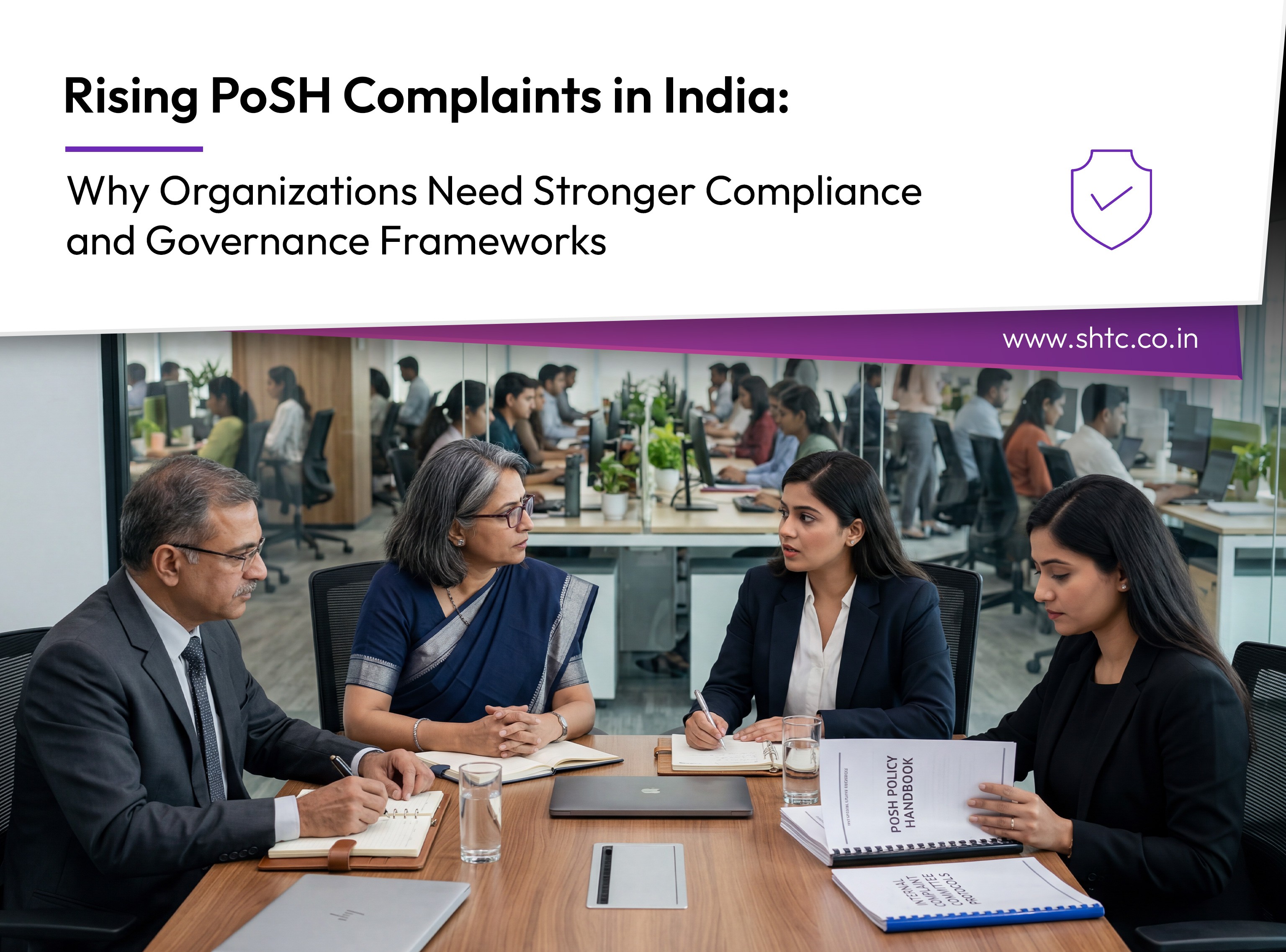
As workplaces become more diverse, Internal Committees play an increasingly crucial role in constructing confidence in processes that happen in the workplace.
Usually, for employees, the Internal Committee portrays the integrity and reputation of the entire system. A strong Internal Committee supports employees make them feel more positive in their workplace by ensuring that their issues will be handled fairly. Thus, responsibility along with answerability gets uplifted, which further helps the workplace to retain a positive and respectful environment overall.
These duties and tasks play a crucial role in a hybrid work culture, where employees may not connect and communicate with HR or managers frequently. In such situations, the Internal Committee provides an important channel for support and fair resolution of concerns.
Workplace Culture Isn't Built Once a Year
Organizations sometimes treat workplace conduct and PoSH compliance training as annual compliance activities. A policy is reviewed. Training is completed. Reporting requirements are met. Then everyone moves on. Workplace culture rarely works that way.
Employees form opinions about their organization every day. They scrutinize and witness how managers answer to concerns, how colleagues are managed and regarded, and whether organizational morals and beliefs are reflected in decisions taken by them every day. Such sort of experiences generally shapes the culture of the workplace much more than any written policy, presented document, or stated presentation.
The organizations that handle conduct at the workplace well are typically not the ones engrossed entirely on compliance. They are the ones maintaining environments where anticipations are stated clearly, consistently respectful behavior is supported, and when employees raise necessary concerns, they feel comfortable.
Final Thoughts
When people discuss workplace culture, the anchor is normally on adaptability, technology, or creativity. For employees, trust comes from feeling appreciated and realizing their issues will be taken seriously. In the present hybrid work culture, interactions that took place at stretches beyond the office are forming clear responsibility and impartial actions more significant than ever.
Most employees do not judge an organization by its policies alone. They notice whether concerns are handled properly and whether reporting channels are easy to access. Through SHTC PoSH Training Compliance, organizations can strengthen awareness, support Internal Committees, and improve compliance in a way that reflects how people work today.