PoSH Compliance in 2026: Audit Requirements, Legal Updates & What Employers Must Prepare For
The era of "ritualistic compliance", defined by static policies and perfunctory posters—is over. Today’s regulatory environment demands "operational robustness" and "Governance Intelligence." Organizations are no longer evaluated on their intent, but on their process integrity and the existence of audit-ready systems.
In 2026, a safe workplace is a measurable governance outcome, and failure to maintain it is viewed as a systemic institutional lapse.
The Evolution of PoSH Governance (2013–2026)
By 2026, the emphasis of PoSH shifts from "conduct" to "structural risk". Conduct risk itself has been replaced by an understanding among governance specialists that harassment stems from structural imbalance of power, rather than merely behavior.
The judiciary and regulators have because of this upward tilted their scrutiny from the "intent" of the employer, to the "outcome and process integrity". Objective:at the present, organizing the environment into one which is "safe" becomes the primary obligation of the employer, and redressal a critical adjunct when it comes to governance.
Board Accountability and Mandatory Reporting Obligations (Effective July 2025)
A defining shift occurred on July 14, 2025, with the enforcement of the Companies (Accounts) Second Amendment Rules, 2025. Under these rules, the Ministry of Corporate Affairs (MCA) has become a central overseeing body for PoSH disclosures, integrating workplace safety and gender equity into the formal annual governance cycle.
Boards are increasingly expected to maintain oversight for evidence-based verification of workplace safety. The Board’s Report must include a specific, mandatory section disclosing:
The total number of sexual harassment complaints received and disposed of during the financial year.
The number of cases pending for more than 90 days.
The organization's strict compliance with maternity benefit provisions.
This mandate ensures that safety metrics are tracked with the same fiduciary rigor as financial performance, moving compliance from "policy-based intent" to "evidence-based verification."
Redefining the Workplace: Virtual and Hybrid Realities
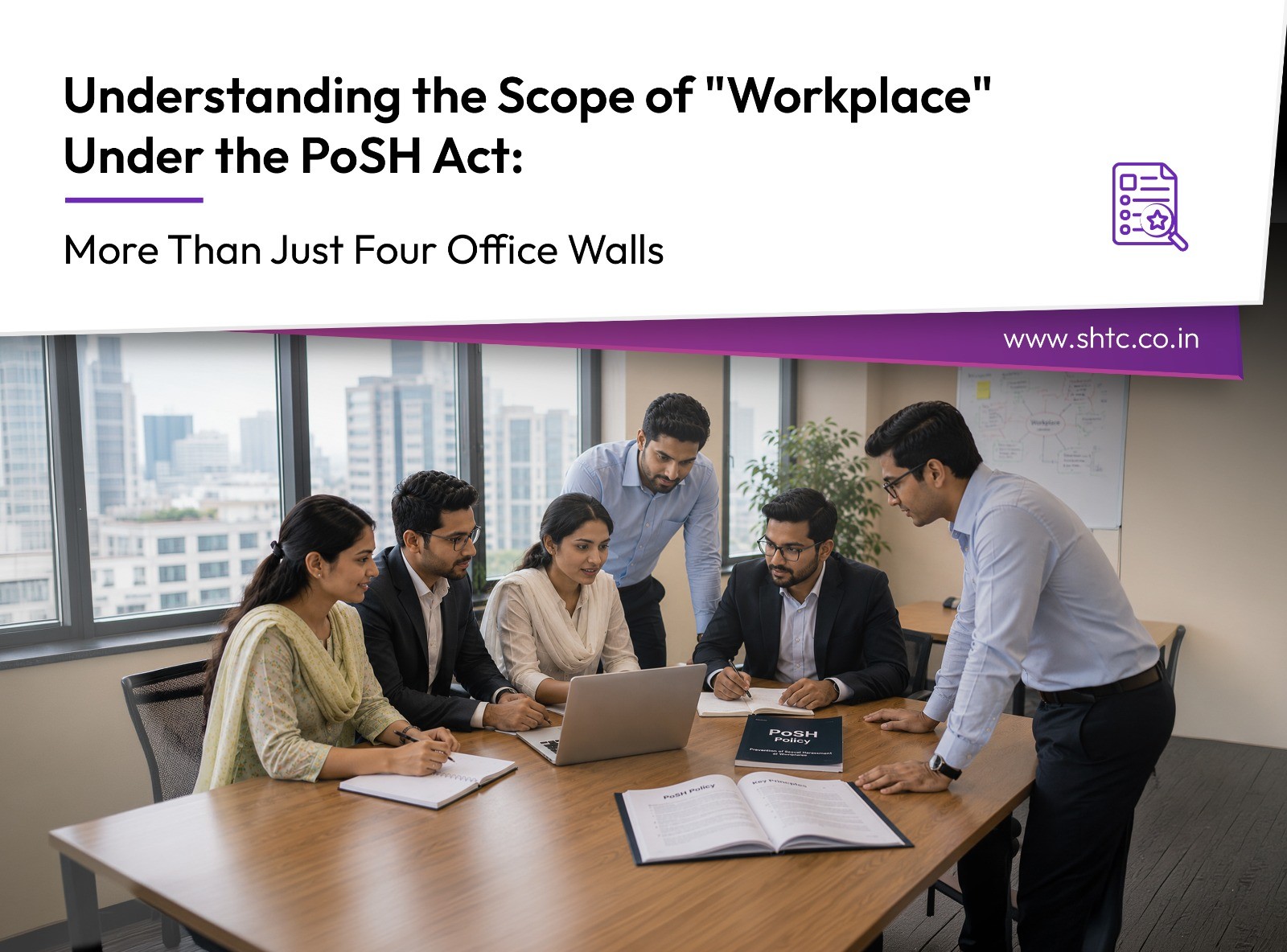
The definition of "workplace" has formally expanded to include virtual, electronic, and digital platforms. Justice Prathiba M. Singh (Delhi High Court) underscored that physical space is no longer the boundary of the Act.
By 2026, the Delhi High Court’s finalized guidelines for virtual workspaces have become the regulatory benchmark for a virtual workplace sexual harassment policy.
Employers must now ensure:
Clear protocols for preserving digital evidence, including logs of work-related video calls and collaboration platform interactions.
Policies that empower the IC to take cognizance of harassment occurring via digital posts, video, or audio settings.
Inclusion of "employment nexus" tests for hybrid and remote work settings.
Internal Committee (IC) Audit Readiness
The IC performs statutory functions that require procedural fairness and independence. Its independence is the foundation of Internal Committee compliance. In 2026, regulators look for common systemic failures:
Invalid Composition: Especially regarding the credentials and independence of the external member.
Tenure Expiration: Failure to rotate members after the statutory 3-year limit.
Procedural Gaps: Lack of reasoned, evidence-based findings in inquiry reports.
An invalid IC constitution invalidates the entire inquiry process, exposing the organization to serious compliance and governance risks.
Documentation and Compliance Systems: From Paper to Proof
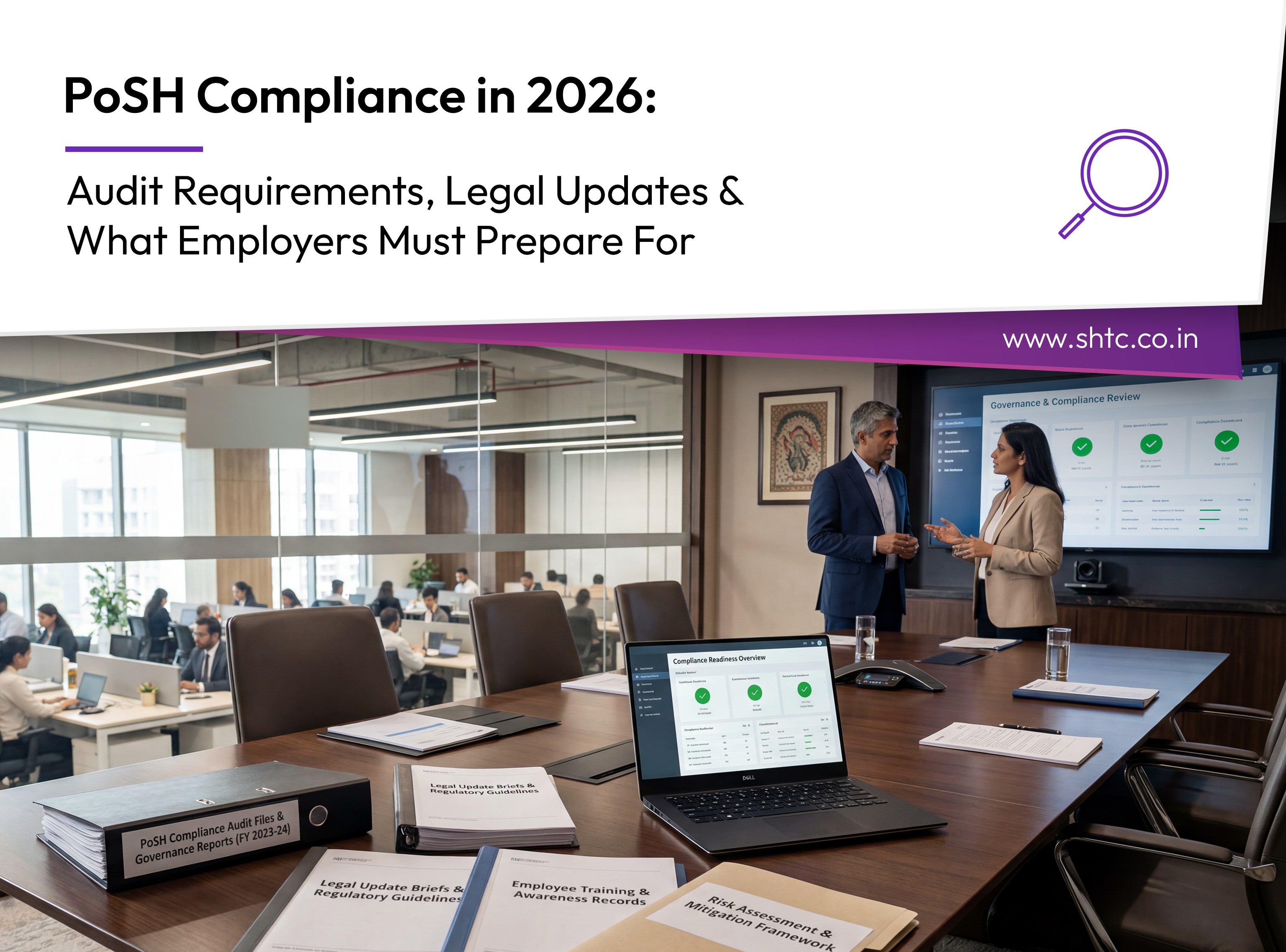
Governance in 2026 is built on "compliance artifacts." Regulators and auditors no longer accept verbal assurances. Organizations must maintain centralized, timestamped documentation including:
Designation-wise participation records for all training.
Timestamped completion logs for PoSH compliance training and e-learning modules.
IC nomination records and external member credentials.
Comprehensive, confidential inquiry files that demonstrate a "preponderance of probabilities" approach.
Comparison: Statutory Mandates vs. Governance Best Practices
| Statutory Obligations (Non-negotiable) | Governance Expectations (Advanced Resilience) |
|---|---|
| Constitution of IC (Section 4) | Centralized digital logs and timestamped compliance artifacts |
| Submission of Annual Report to District Officer | Independent third-party culture and "safety confidence" audits |
| Section 19 awareness programs and PoSH compliance training | Bystander Responsibility: Training employees to intervene rather than remain "neutral" |
| Board Report disclosures (MCA 2025 Rules) | Website-level transparency via an "Inclusion Snapshot" |
| 90-day inquiry timeline | Role-specific training for CXOs to manage structural power risks |
Common PoSH Compliance Failures and The "Zero Complaint" Fallacy
As a Senior Advisor, I must warn CEOs against the "Zero Complaint" fallacy. A report of zero complaints is often a red flag indicating a lack of reporting confidence rather than a safe workplace. By 2026, "informal handling," management-led resolutions, or "fact-finding" calls outside the statutory IC framework are legally indefensible.
These "short-cuts" are now treated as independent violations by courts, shifting liability from individuals directly to the organization.
Operational, Legal, and Reputational Risks
This is where the cost of non-compliance becomes too high to bear:
Financial/Operational: Penalties of up to ₹50,000 are levied against the company for its first violation. Repeated instances will result in suspension of business license or exclusion from any dealings with the government.
Escalating Attention: Complaints increased by 29% during 2023-2025 period according to Economic Times data; a result of the educated and empowered workforce which cannot tolerate failures.
Reputation Disastrous: With technology changing the times, mishandling just one case can create a reputational crisis.
2026 PoSH Compliance Checklist
Ensure your organization meets the following PoSH compliance updates 2026:
Verify IC Validity: Confirm external member credentials and ensure the IC is constituted by a legally competent "employer."
Tenure Audit: Ensure no IC member has exceeded the 3-year statutory limit.
MCA Alignment: Update Board Reports with mandatory disclosures (received, disposed, pending >90 days, maternity benefits).
[Virtual Audit: Implement protocols for digital evidence preservation and update policies for virtual meetings.
Artifact Management: Secure timestamped completion logs and designation-wise training records.
[Annual Filing: Submit the Annual Report to the District Officer (even for "Nil" years).
Conclusion: Building a Sustainable Governance Framework
PoSH Training in 2026 is no longer about checking boxes; it is about "compliance intelligence" and institutional resilience. The only way to manage the new, structural risks of today's workplace is to create a system that is fair, defensible and trusted by the worker.
Companies should transition to sustainable recurring, subscribe-able governance models that last beyond leadership changes and safeguard the employee and the institution.